Bee the Solution with Community Science!
Of the 4,000 species of bees in North America, 1 in 4 is at risk of extinction. Help them by participating in Community Science: coordinated actions anyone can take to advance science, conservation, and advocacy.
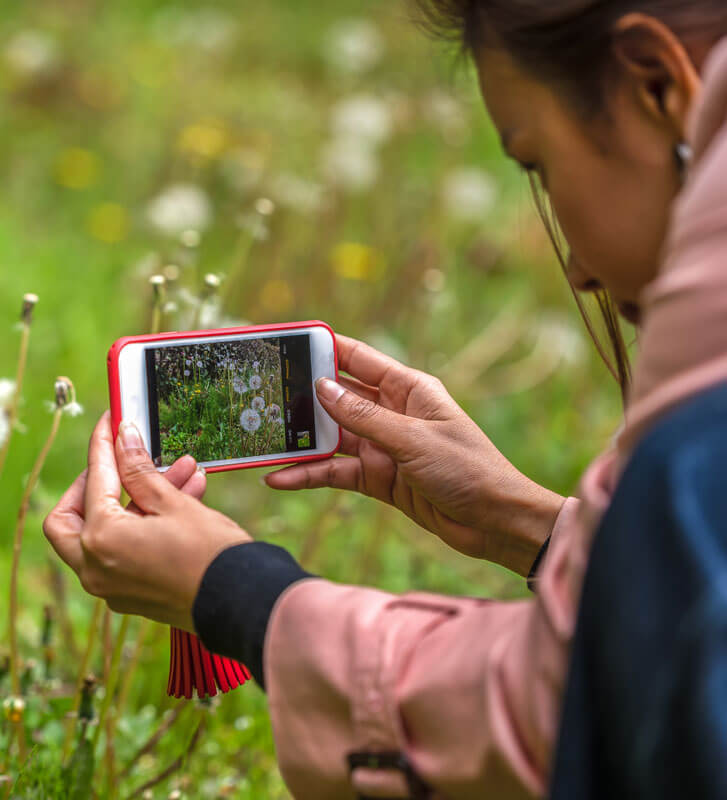
Want to help TBC track bee and pollinator population data to document biodiversity? Armed with curiosity, a mobile device, and the iNaturalist app, you’ll find and photograph pollinators and their habitat in your area and share them with more than one million scientists, researchers, and naturalists. Explore solo, with friends and family, or with colleagues and community groups!
It’s this easy! Watch to the end to see a friend buzz by!.
Join Our Community Science Team

1. GET THE INATURALIST APP
Download the app from the AppStore or Google Play and create your observer profile! Here’s how to create an account.

2. JOIN TBC’S PROJECT
Become a member of TBC’s Bee the Solution Global Project. Join to receive updates, resources, shout-outs, and more!
3. SHARE YOUR OBSERVATIONS
Upload photos to get identifications from experts and observers! Use this Getting Started guide.
Save the Bees by Taking Photos
The concept is simple: Everyone has the power to advance bee research with just the snap of a picture. Also referred to as “citizen science,” community science projects galvanize the time, passion, and participation of concerned, curious people to get in the field to collect data or take other action that fuels research. You don’t need a degree or experience in a lab to participate – all you need is the desire to help out!
-
- Connect with local greenspaces and the creatures who live there.
- Contribute to global databases and the work of researchers and naturalists.
- Create useful programs and resources for community education.
- Improve your bee and pollinator identification skills.
- Increase access and participation in the creation of data sets about bee diversity and distribution.
Bee the Solution: Bees in Urban Green Spaces
TBC’s Bee the Solution program uncovers the species that thrive in diverse metro areas by training professionals, community members, and youth (online and in person) on how to photograph, edit, and upload images to the iNaturalist and BeeMachine apps.
Our Bee Blitz field work includes large-scale wildlife reclamation projects like Manhattan’s High Line and Staten Island’s Freshkills Park as well as community-centered city parks, emphasizing green spaces within New York Climate Act-designated disadvantaged communities where possible. Partner scientists at the New York Natural Heritage Program, Baruch College, and Kansas State University provide ongoing consultation and analysis to help synthesize data and findings.
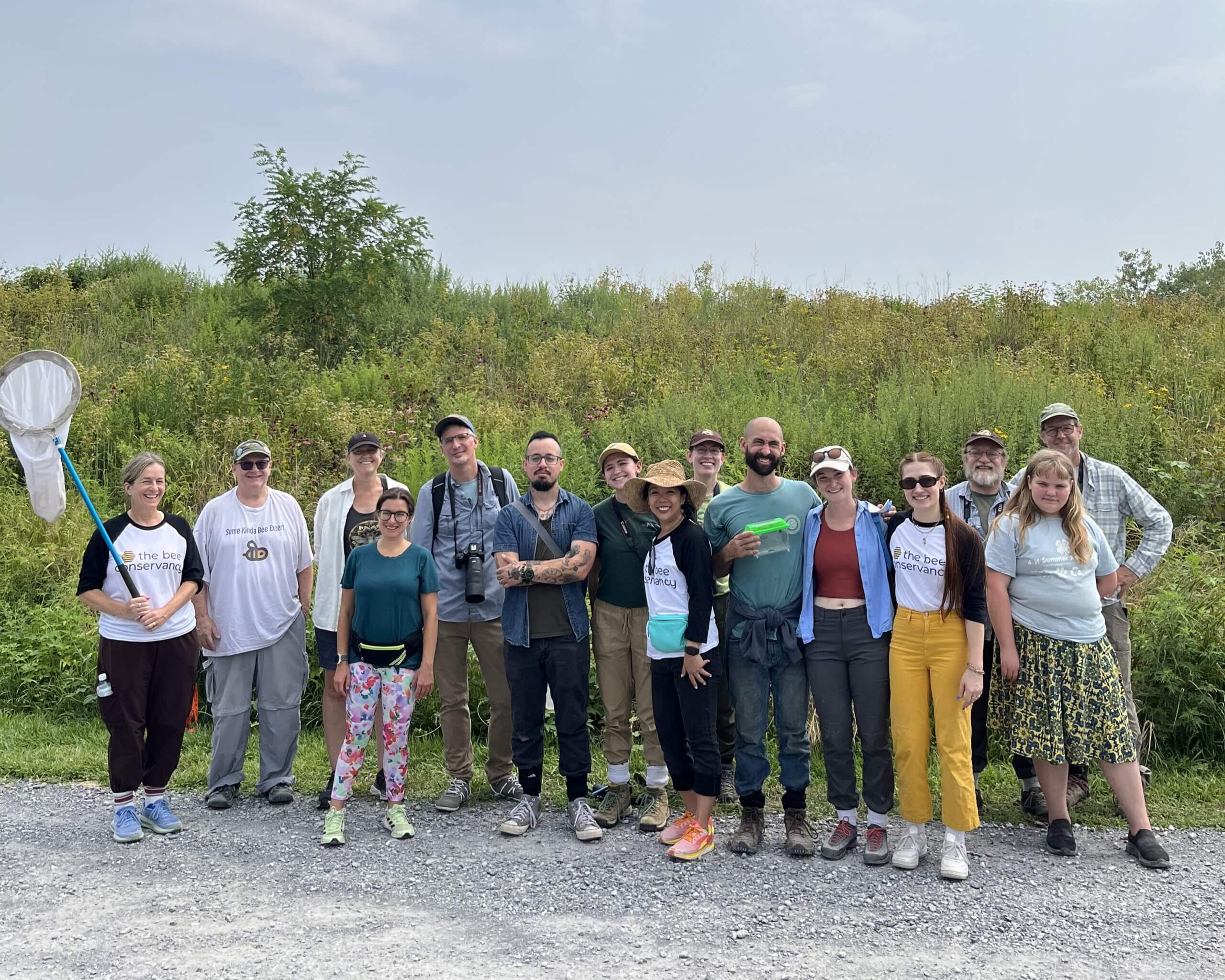
Scientists, photographers, and nature lovers snap pix at Sojourner Truth State Park in Kingston, NY.
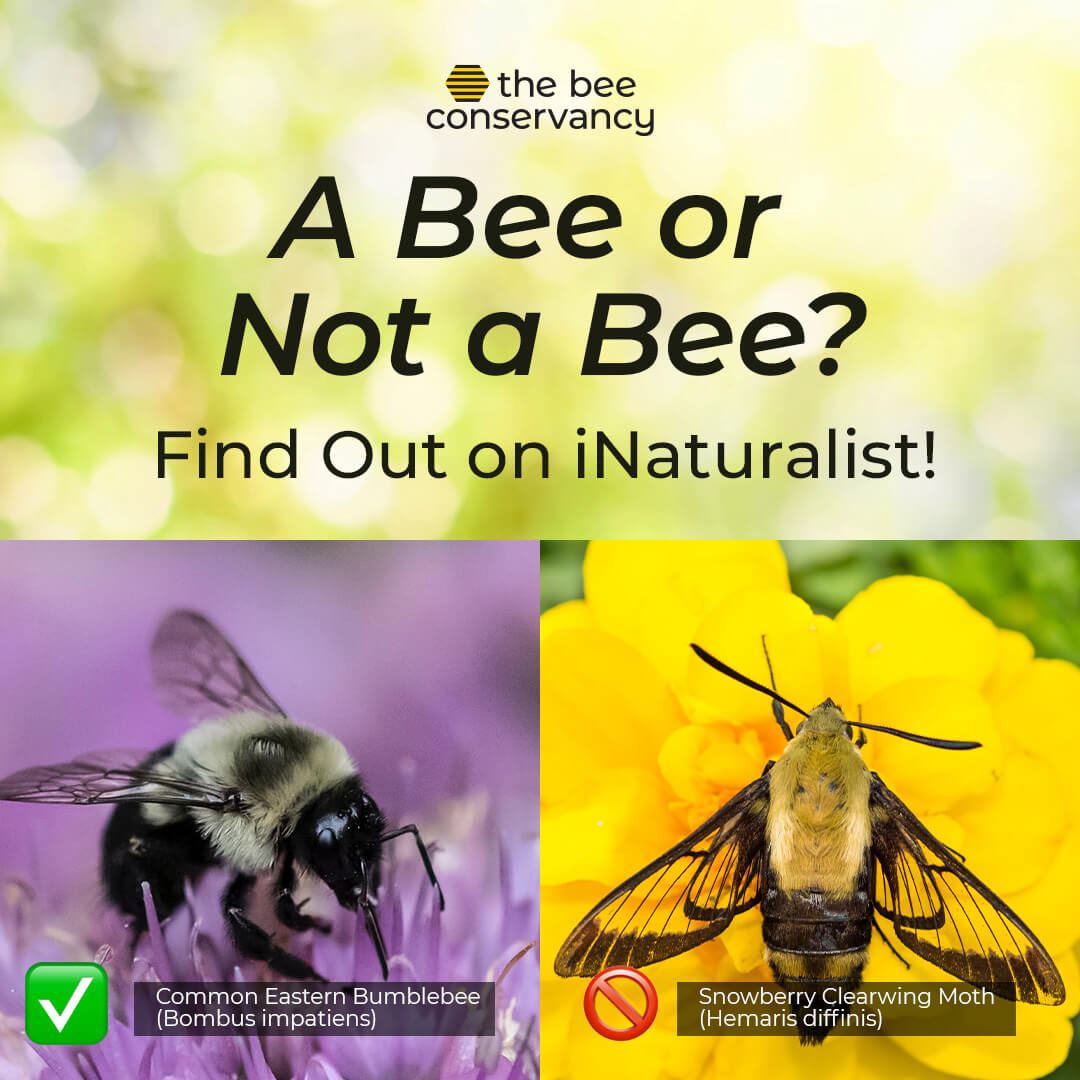
Learn to Identify Bees from their Lookalikes
“A Bee or Not a Bee?” That is the question, and TBC’s fun iNaturalist project strives to answer it! Our project invites you to collaborate with naturalists around the world to determine whether the insect buzzing by is a bee, wasp, fly, or other common bee doppelgänger.
There are over 4000 species of bees in North America and at least 20,000 different species worldwide. To a casual observer looking for bees, many flying insects might trick you. Even experts often take a closer look because thousands of non-bee creatures have evolved to mimic the shape, color, size, and behavior of bees. To add confusion, bees themselves come in countless sizes and colors, and the green, black, blue, and orange bugs you thought were flies or wasps might actually be bees. Other times, the fuzzy black and yellow bug you were sure was a bee might turn out to be a moth!
Everyone at all levels of bee knowledge are welcome to start participating today.
Community Science Frequently Asked Questions
What is the best time to observe bees in nature?
Can I participate in community/citizen science with a group?
Yes! Invite friends, family, students, colleagues, and community members — or, embark on observation-gathering alone! TBC supports fun ways of getting folks outdoors, engaging with local ecology, and contributing to science. Participating in iNaturalist projects is a great way to bring communities together while still maintaining social distancing recommendations, if needed! Tackle different corners of a park or a town, share observations and insights in real time, and connect with friends across the world to boost global data.
Are there any prerequisites to participate in TBC’s community science program?
No formal education or training is required to participate in TBC’s iNaturalist community science program. To become an iNaturalist observer, you will need a photo-taking device and the ability to upload your photographs to the iNaturalist platform or app. Use this Getting Started guide. Since you’ll be outdoors when participating, we recommend you keep an eye on the weather forecast and dress appropriately. Below is a list of suggested items to bring with you to help your adventure run smoothly!
- Water
- Sunscreen
- Hat
- Comfortable walking shoes
- Camera phone/device with iNaturalist app already downloaded
Can The Bee Conservancy help my organization/youth group/professional team get trained?
If your community organization or corporate team is interested in a training on how to photograph, edit, and upload pollinator and plant observations to iNaturalist and BeeMachine, please reach out to us through our Contact Us form.
Will I get stung by bees or other insects if I’m trying to photograph them?
During your observations, you may get closer to bees and other organisms than you are typically used to. However, if you approach them with care and caution, moving slowly and calmly, you reduce the risk of agitating them – and increase your chances of taking a great photo!
Did you know that most bees don’t sting? And the ones that do (such as honey bees, and very rarely, bumblebees) only do so when they are provoked or protecting their home, babies, and food stores. If a bee or other stinging insect like a wasp or hornet starts buzzing by you, don’t panic and swat at them. This may make them feel as though they are under attack, and they may get into defensive mode.
Please note that TBC encourages anyone taking walks in nature to make informed decisions about their personal safety – and to take any precautions necessary based on their ability, comfort levels, and special circumstances! If you have experienced serious allergic reactions to any insect bites or stings in the past — whether from a bee, ant, plant, wasp, hornet, or other organism — participating in an iNaturalist insect project may not be the best choice for you. Visit this page in the future to see if other opportunities more suitable for you are available.
How will I know what insects I have photographed? Can I get help with species identification?
iNaturalist has a great strategy for helping you identify the organisms you photograph. It has the fantastic computer vision function which suggests common IDs for you based on location, visual similarity, and the collective knowledge of the community of iNaturalist users. The suggestions are based on the quality of the photo (it can be hard to photograph bees!) and are not always correct, but they will often point you in the right direction. Community members often step-up to help hone your ID as well.
How will the data that I collect in iNaturalist be used?
A large number of scientists and taxonomic experts are involved in the iNaturalist community and provide enormous value by helping to identify observations. Your photos, depending on their quality, will be reviewed by experts and other naturalists with the goal of verifying an accurate species identification for your observation. Observations that reach “Research-grade” and certain other requirements will be included in a widely used global research database called Global Biodiversity Information Facility.